
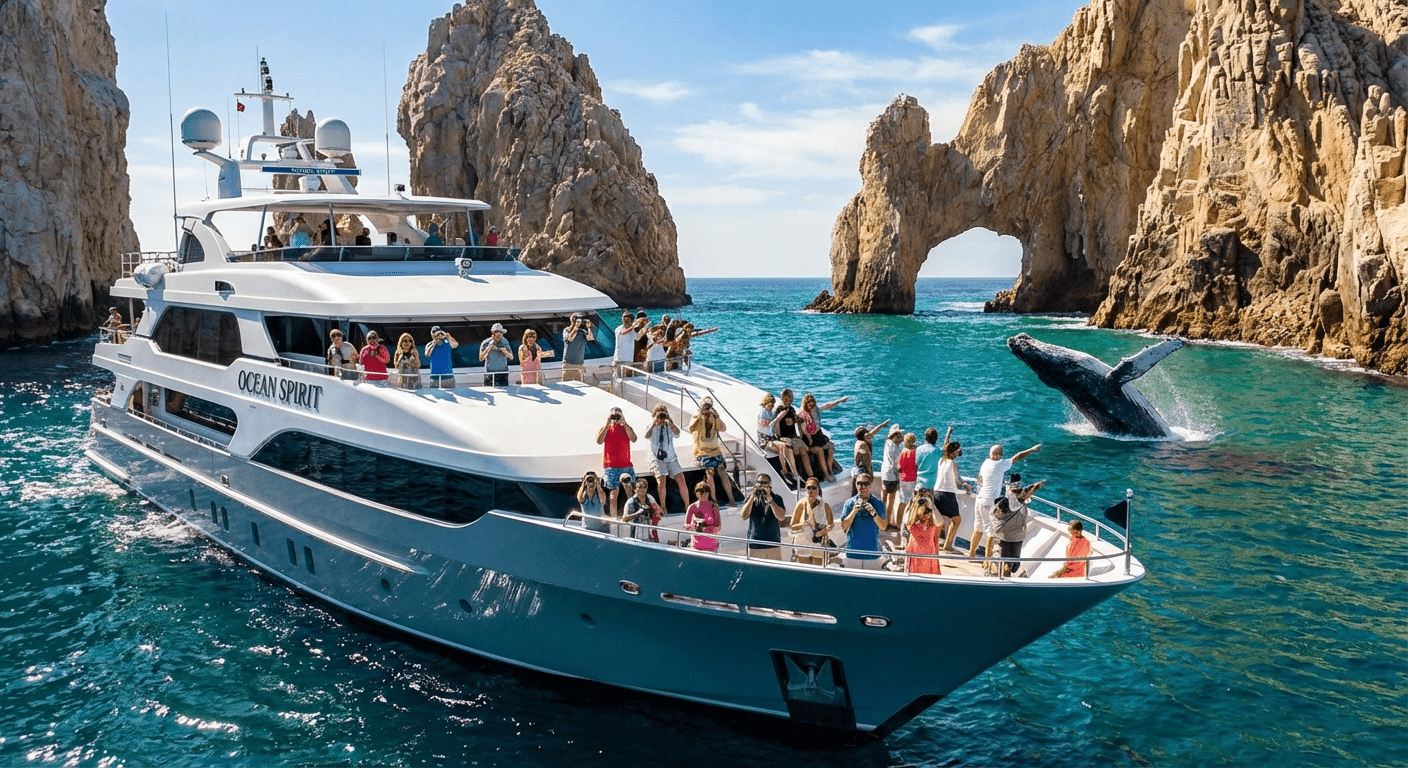
Few natural spectacles match the raw power and grace of a humpback whale breaching the surface just meters from your boat. The spray, the thunderous splash, the sheer immensity, it's a moment that stays with you forever.

Cabo San Lucas offers some of the most reliable and spectacular whale watching opportunities anywhere in the world. But timing matters enormously. Visit during peak season and you might see dozens of whales in a single morning. Visit at the wrong time and you'll spend your tour scanning empty horizons.

This guide answers the most important question for anyone planning a Cabo whale watching experience: when exactly should you go?
The Short Answer: December Through April
If you're just looking for the headline, here it is: The best time for whale watching in Cabo is mid-December through late March, with peak activity in January and February.

During these months, you'll have the highest likelihood of encountering whales, particularly humpbacks and gray whales making their annual migration to the warm waters surrounding Baja California Sur.

But there's much more to know if you want to optimize your experience. Let's dive deeper into Cabo whale season and what makes it so special.
Understanding Whale Migration Patterns in Cabo
Why Whales Come to Cabo
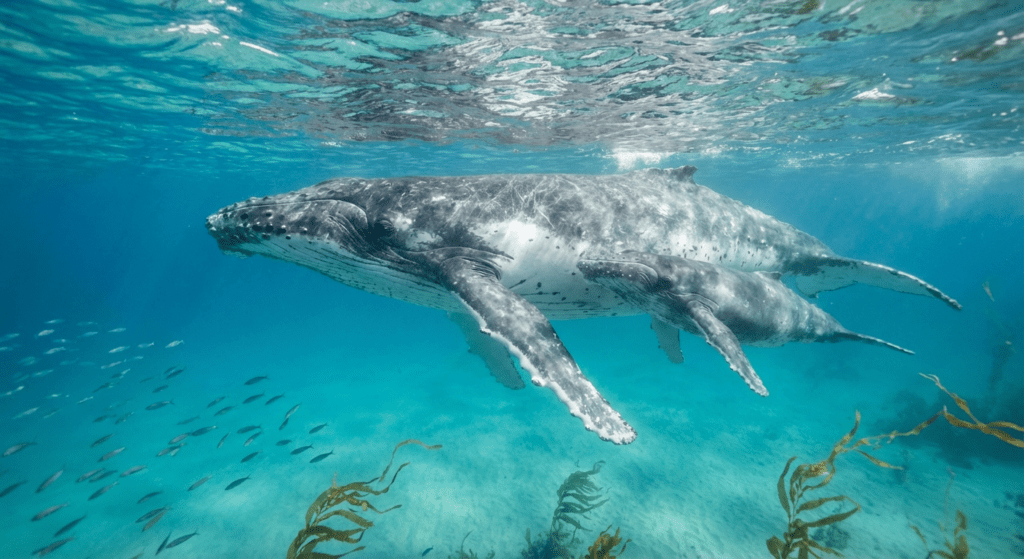
Whales don't visit Cabo San Lucas by accident. They're traveling thousands of miles from their summer feeding grounds in the cold, nutrient-rich waters of Alaska and the Pacific Northwest to the warm, protected bays of Baja California for a specific reason: breeding and calving.

The warm waters around Cabo provide ideal conditions for:
- Mating: December through February is prime breeding season
- Birthing: Pregnant females give birth in these protected waters
- Calf-rearing: Newborns gain strength before the long journey north

This isn't a quick visit. Many whales spend 2-4 months in these waters, which is why Cabo whale season extends across several months rather than just a few weeks.
The Migration Timeline
Early Season (December - Early January)
The first arrivals are typically adult humpbacks, followed by gray whales. Numbers are building but not yet at peak. Weather can still be variable with occasional storms.

Peak Season (Mid-January - Mid-March)
This is whale watching in Cabo at its finest. Multiple species are present in high numbers, including mothers with new calves. Activity is constant, and sightings are virtually guaranteed.

Late Season (Late March - April)
Whales begin their northern migration, but you'll still see plenty of activity, particularly gray whales who tend to linger a bit longer. Spring weather is generally excellent.

Off-Season (May - November)
Most whales have departed, though occasional sightings still happen. Blue whales and orcas sometimes pass through during summer months, but dedicated whale watching tours typically don't operate during this period.
Which Whale Species You’ll See in Cabo
Humpback Whales: The Acrobats
When: December through April
Peak Numbers: January and February

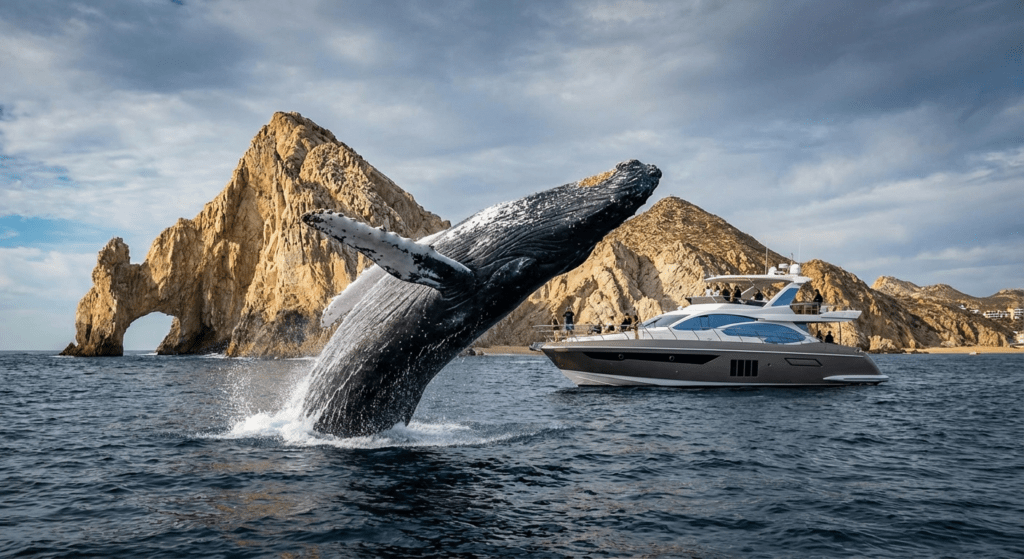
Humpback whales are the stars of Cabo whale watching tours. These 40-ton giants are known for their spectacular surface behaviors, breaching, tail-slapping, and fin-waving that create unforgettable photo opportunities.

What Makes Them Special:
- Highly acrobatic despite their size
- Often curious and may approach boats (though captains maintain respectful distance)
- Males sing complex songs audible even from the boat
- Newborn calves are remarkably active and playful
Gray Whales: The Long-Distance Champions
When: January through April
Peak Numbers: February and March

Gray whales undertake one of the longest migrations of any mammal, up to 12,000 miles round trip from Alaskan waters to Baja California. They're slightly smaller than humpbacks but no less impressive.

What Makes Them Special:
- Often spotted with calves in late season
- Friendlier reputation; some individuals actively interact with boats
- Distinctive heart-shaped blow (spout)
- Frequently seen in shallower waters closer to shore
Other Species (Less Common)
Blue Whales: The largest animals ever to exist on Earth occasionally pass through Cabo waters, typically in summer rather than the main whale season.

Orcas (Killer Whales): Occasionally spotted year-round, though less predictable than humpbacks and grays.

Dolphins: While not whales, you'll almost certainly encounter multiple dolphin species during any whale watching tour, they're present year-round and often travel in large pods.
Month-by-Month Breakdown: Best Time to See Whales in Cabo
December: The Season Begins
Whale Activity: 6/10
The first scouts arrive, with numbers increasing throughout the month.

Weather: Pleasant temperatures (70s-80s°F) but occasionally windy with higher swells.

Crowd Level: Low. Tourism is building toward holidays but whale-watching tours remain uncrowded.

Verdict: Good option if you want fewer tourists and don't mind slightly lower whale numbers.
January: Ramping Up
Whale Activity: 9/10
Now we're talking. Both humpbacks and gray whales are present in significant numbers.

Weather: Excellent. Calm seas, sunny days, comfortable temperatures.

Crowd Level: Moderate. Post-holiday lull means better availability.

Verdict* One of the two best months for Cabo whale watching. Strong activity with better availability than peak February.
February: Peak Season
Whale Activity: 10/10
This is it, the best time for whale watching in Cabo. Maximum numbers, lots of calves, constant activity.

Weather: Outstanding. Most consistent weather of the season with calm seas and blue skies.

Crowd Level: High. Everyone knows February is peak, so book tours well in advance.

Verdict: The absolute best month if you can handle the crowds and plan ahead. Sightings are virtually guaranteed.
March: Still Excellent
Whale Activity: 9/10
Still very high numbers, especially in early March. Late March sees some whales beginning their northern migration.

Weather: Beautiful. Spring conditions with warm days and calm seas.

Crowd Level: Moderate to high, decreasing toward month-end.

Verdict: Nearly as good as February with slightly smaller crowds. Excellent choice.
April: Late Season
Whale Activity: 6/10
Whales are departing, but gray whales in particular often linger through mid-April.

Weather: Warm and increasingly hot as month progresses. Still generally good sea conditions.

Crowd Level: Low. Tourism drops off after spring break.

Verdict: Still worthwhile, especially early April, with the advantage of fewer tourists and lower prices.
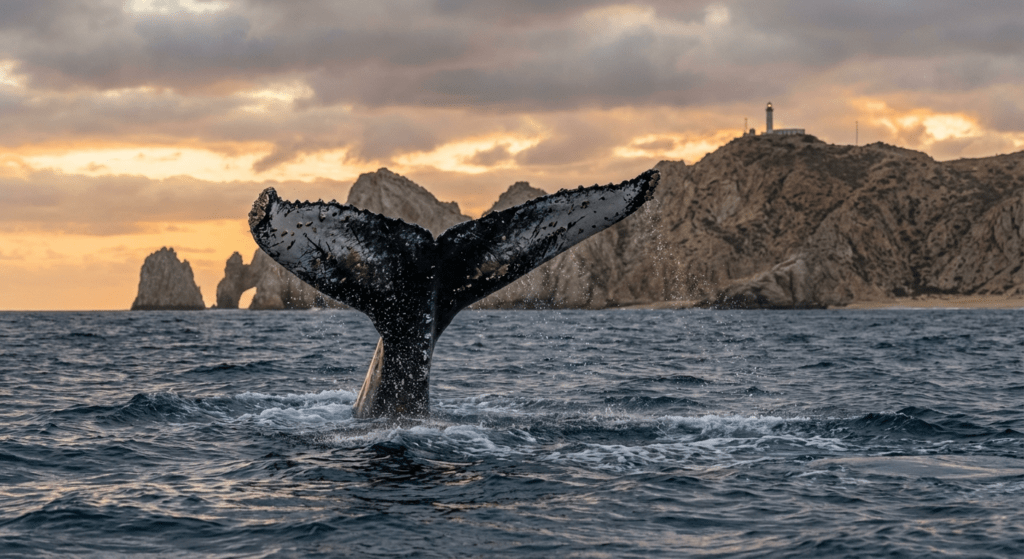
Weather Considerations for Cabo Whale Watching
Weather significantly impacts your whale watching experience in ways that go beyond simple comfort.
Sea Conditions Matter More Than You Think
Calm seas offer several advantages:
- Better visibility: Easier to spot blows and surface activity
- Smoother ride: Less seasickness, more enjoyment
- Closer approaches: Captains can position boats better in calm water
- Photography: Much easier to capture shots without constant pitching and rolling

The best weather for whale watching in Cabo typically occurs January through March, when Pacific storms are less frequent and seas tend to be calmer.
Wind Patterns
Morning tours often benefit from lighter winds. As the day progresses, winds typically pick up, creating chop that can obscure whales and make the ride rougher.

Pro Tip: Book the earliest available tour departure. You'll get calmer seas, better light for photos, and often see more active whales (they tend to be more energetic in early morning).
Temperature and Dress
Water temperatures in Cabo during whale season range from 68-72°F. While that's warm by ocean standards, it's cooler than air temperature, and combined with wind, it can feel chilly on the water.

What to Bring:
- Light jacket or windbreaker
- Hat with strap (wind can be strong)
- Sunglasses with retention strap
- Reef-safe sunscreen
- Motion sickness medication if prone to seasickness
Booking Your Cabo Whale Watching Tour: Expert Tips
How Far in Advance Should You Book?
Peak Season (January-March): Book 2-4 weeks ahead, especially for weekends. Popular operators sell out early in this period.

Shoulder Season (December, April): One week advance booking is usually sufficient.

Last-Minute Options: Same-day and next-day availability exists, particularly on weekdays, but you'll have fewer tour operators to choose from.
Morning vs. Afternoon Tours
Morning tours win for multiple reasons:
- Calmer seas (winds increase throughout the day)
- More active whales (animals tend to be more energetic in morning)
- Better light for photography (lower angle, less harsh)
- Higher success rates according to most operators

That said, afternoon tours work perfectly fine and may offer better availability or pricing.
Tour Length: What to Choose
Most Cabo whale watching tours range from 2-4 hours.

2-Hour Tours: Budget-friendly option. You'll likely see whales but with less time for multiple encounters.

3-Hour Tours: Sweet spot for most people. Enough time for multiple sightings without feeling rushed or exhausted.

4+ Hour Tours: Premium option often including snorkeling or other activities. Only necessary if you want the extended experience.

For dedicated whale watching, 3 hours provides the best balance of experience quality and value.
Private vs. Shared Tours
Shared Tours ($60-$100 per person):
- Cost-effective
- Social experience
- May have 15-30 people aboard
- Less flexibility in where boat goes

Private Tours ($600-$1,200 for group):
- Exclusive experience
- Flexibility to stay with specific whales longer
- Better photography opportunities
- Can adjust schedule and route

For groups of 4-6, private tours offer good value. For couples or solo travelers, shared tours make more sense unless budget isn't a concern.
What “Whale Watching Guarantee” Actually Means
Many operators advertise a whale watching guarantee, but read the fine print:

Typical Guarantee: If you don't see whales, you can take the tour again another day (not a refund).

Why It Matters: During peak season (January-March), you'll see whales. The guarantee is basically irrelevant. Outside peak season, it provides some protection but requires you to have additional days in Cabo for a second attempt.

Reality Check: Reputable operators in Cabo have success rates above 95% during January-March and still above 80% in December and April. You're very likely to see whales regardless of guarantee policies.
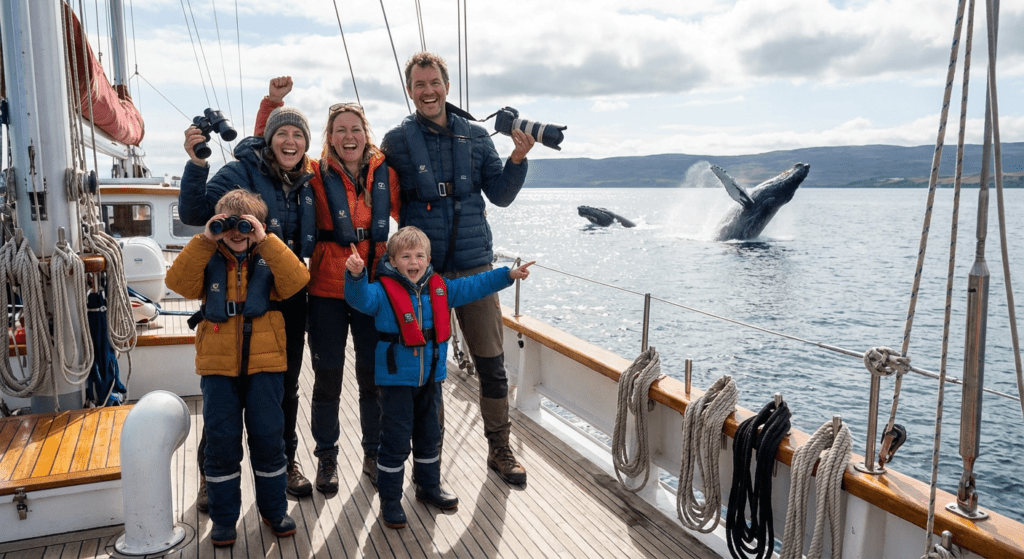
Making The Most of Your Cabo Whale Watching Experience
Photography Tips
You don't need professional camera gear to capture amazing whale photos, but a few tips help enormously:

Camera Settings:
- Fast shutter speed (1/1000s minimum) to freeze action
- Continuous shooting mode
- Increase ISO if needed to maintain fast shutter in overcast conditions

Practical Tips:
- Use a strap! Phones and cameras get dropped overboard regularly
- Take more photos than you think you need, whale breaches happen in split seconds
- Don't watch entire experience through a viewfinder; put camera down periodically
- Zoom out more than you think, whales are big and breach high
Ethical Whale Watching
Choose operators who follow responsible whale watching guidelines:
- Maintain proper distance (100+ yards typically)
- Limit time near any individual whale
- Never chase whales
- Cut engines when whales are very close
- Avoid separating mothers from calves

Reputable Cabo whale watching tours follow these guidelines. Look for operators certified by marine conservation organizations.
What Else You’ll See
A Cabo whale watching tour offers more than just whales:

- Dolphins: Multiple species, often in large pods
- Sea Lions: Haul out on rocks around Los Arcos and Land's End
- Sea Birds: Including pelicans, frigatebirds, and boobies
- Manta Rays: Sometimes spotted near the surface
- The Famous Arch: Most tours pass the iconic Land's End rock formation
Beyond the Boat: Whale Watching from Shore
While boat tours provide the best experience, you can occasionally spot whales from strategic shore locations:

Best Spots:
- The point at Land's End
- Lover's Beach area
- Corridor hotels with elevated viewing points
- Pedregal viewpoints

December through April, bring binoculars and watch for blows (spouts) on the horizon, particularly early morning and late afternoon when water is calmest. You won't get the up-close experience of a boat tour, but spotting a distant breach while enjoying a beachside beverage has its own charm.
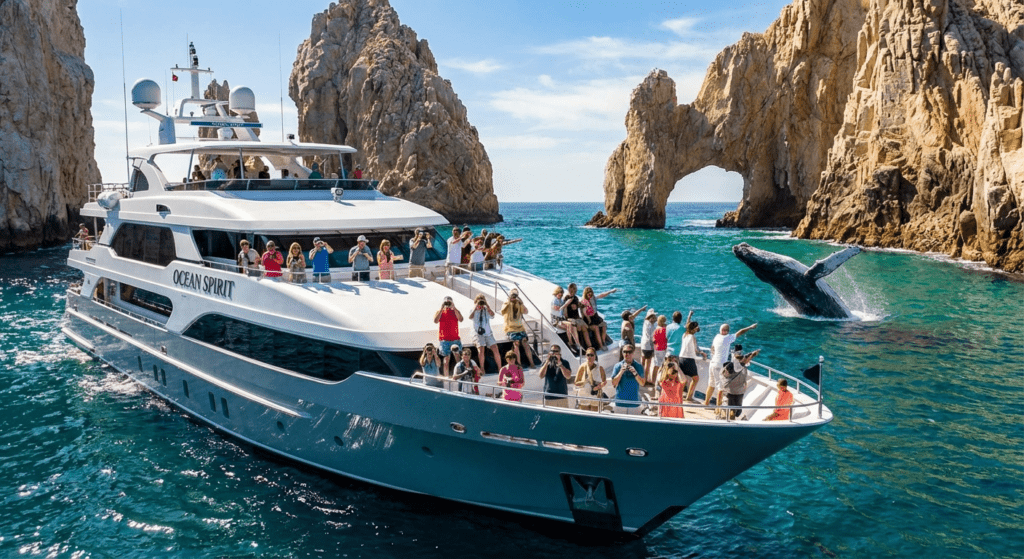
Planning Your Cabo Whale Season Trip
Sample Itineraries
Long Weekend (3 nights):
- Day 1: Arrival, settle in, enjoy beach/pool
- Day 2: Morning whale watching tour, afternoon at leisure
- Day 3: Other activities (snorkeling, ATV, etc.)
- Day 4: Departure

Week-Long Trip (7 nights):
- Day 1-2: Settle in, beach time
- Day 3: Morning whale watching tour
- Day 4-5: Other Cabo activities
- Day 6: Second whale watching tour (different operator or route)
- Day 7-8: Beach time, departure
Combining Whale Watching with Other Activities
Cabo offers diverse activities that combine well with whale watching:

Morning: Whale watching tour
Afternoon: Beach time, pool, or sunset dinner cruise

Other excellent Cabo activities:
- Snorkeling at Chileno Bay or Santa Maria
- ATV desert tours
- Sport fishing
- Zip-lining and adventure parks
- Historic San Jose del Cabo exploration
Key Takeaways
- Best time: Mid-December through late March, with January and February being absolute peak
- Species: Humpback whales and gray whales are the primary species you’ll encounter ✓
- Weather: January through March offers the most consistent weather and sea conditions ✓
- Booking: Reserve 2-4 weeks ahead during peak season, especially for weekends
- Tour timing: Morning tours typically offer better conditions and more active whales
- Duration: 3-hour tours provide the best balance of experience and value
- Success rate: 95%+ during peak season, you will almost certainly see whales
Ready to Experience Cabo Whale Watching?
The best time to see whales in Cabo is clearer now, but nothing beats actually being there, feeling the spray from a breaching humpback, hearing the blow of a gray whale surfacing nearby, watching a calf learning to use its massive tail flukes.

At Best Cabo Yachts, we specialize in creating unforgettable Cabo whale watching experiences aboard our fleet of comfortable, well-maintained vessels. Our expert captains know the best spots, our naturalist guides provide fascinating insights into whale behavior, and our photographers ensure you leave with amazing memories captured in stunning images.

Whether you're planning a romantic whale watching excursion, a family adventure, or a group outing with friends, we offer tours customized to your schedule and preferences.

Book your Cabo whale watching tour today and secure your spot during peak season. Our tours during January through March fill quickly, so don't wait.

- Expert captains with 10+ years experience
- Small group sizes for better viewing (never more than 15 guests)
- Professional-grade photography included
- Whale sighting guarantee
- Complimentary beverages and snacks
- Family-friendly and accessible

Reserve your tour now and get ready for the natural spectacle of a lifetime. The whales are waiting, don't miss your chance to witness one of nature's most incredible migrations up close.